A refined approach to restaurant partitions
Bathed in natural light, Restaurant Smørrebrød in Clermont-Ferrand is defined by clarity and calm. Tall windows flood the interior with daylight, while a soft palette of whites, pale wood, and sculptural furniture creates a serene, almost gallery-like atmosphere. Within this setting, restaurant partitions are introduced not as barriers, but as subtle architectural layers. Designed by interior architect Jennifer da Costa of Sognodite, the space is carefully composed to guide movement and perception — allowing guests to feel both connected to the room and comfortably secluded within it.
Project Details
Project: Restaurant partitions
Location: Clermont-Ferrand, France
Client: Restaurant Smørrebrød
Interior design: Sognodite
Designing restaurant partitions that shape space and experience
At the heart of the dining area, a series of suspended partitions gently organizes the space. Rather than enclosing, they suggest zones — creating quieter pockets for dining without interrupting the visual flow. From different vantage points, the partitions reveal themselves in layers. Seen from afar, they appear light and almost transparent. Up close, their geometry becomes more pronounced, introducing depth and structure. This shifting quality allows the space to feel open and intimate at the same time — a balance that is essential in contemporary restaurant design. The partitions respond continuously to their surroundings: to daylight, to movement, and to the presence of people within the space.
Restaurant partitions as part of the architectural language
Rather than acting as decorative additions, the partitions are integrated into the architectural rhythm of the interior. Their vertical suspension echoes the height of the windows, while their geometric structure introduces a subtle contrast to the soft, organic atmosphere of the dining area. The crisp white finish blends seamlessly with the furniture, yet the faceted surfaces create a delicate play of light and shadow throughout the day. This interplay adds texture without visual weight — allowing the partitions to remain present, yet never dominant. In this way, the partitions become part of the spatial language of the restaurant, rather than a separate element within it.
Flexibility for evolving restaurant layouts
Hospitality interiors are rarely static. Concepts evolve, layouts shift, and spaces are continuously adapted to new needs. Within this context, flexibility becomes essential. The restaurant partitions are designed to accommodate a wide range of spatial conditions — from compact dining areas to larger, open-plan settings. Their modular composition allows them to extend, adapt, or reposition within the space, while different finishes and suspension options ensure compatibility with varying architectural constraints. This makes them particularly relevant for interior designers working on renovations, reconfigurations, or multifunctional hospitality environments, where adaptability is key.
A seamless integration of design and installation
Despite their sculptural presence, the partitions remain remarkably practical. The lightweight system allows for a smooth installation process, while its modular nature makes it easy to adjust or expand over time. Rather than being a fixed intervention, the partitions function as a flexible layer within the interior — capable of evolving alongside the restaurant itself.
A Nordic dining experience
Restaurant Smørrebrød brings a refined Nordic dining experience to Clermont-Ferrand, where simplicity and seasonality are at the core of the concept. The menu balances Scandinavian tradition with contemporary French influences, resulting in dishes that are both familiar and unexpected. This same philosophy is reflected in the interior. Just as the cuisine focuses on clarity and composition, the space is defined by restraint, precision, and attention to detail — with restaurant partitions playing a key role in shaping the overall experience.
Challenge the expected
Interior architect Jennifer da Costa approaches each project as a dialogue between space, material, and perception. Her work is driven by a desire to challenge visual expectations, creating interiors that initially surprise and gradually reveal their logic. Drawing inspiration from fashion, art, and cultural heritage, she composes spaces that feel both expressive and intuitive. At Smørrebrød, this approach results in an interior where every element — including the restaurant partitions — contributes to a coherent and immersive spatial experience.
Our most popular restaurant partitions
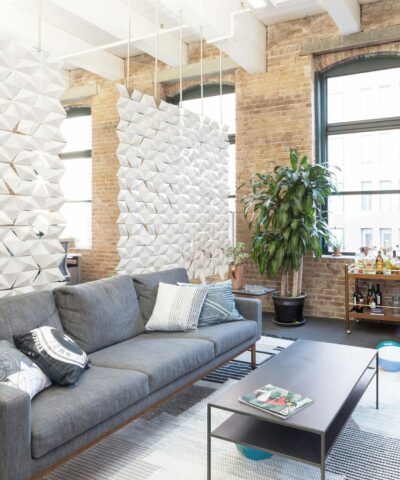


Curious about our full range of Facet dividers? Visit our shop now